
The Structure Most People Walk Straight Past
There are places on Earth where history feels incomplete. Places where the official explanation sounds reasonable at first, until you actually stand there yourself. The Valley Temple at Giza became one of those places for me.
Millions of people visit Giza every year. They stand in front of the pyramids, take photographs beside the Sphinx, and then walk straight past one of the most fascinating structures on the entire plateau without giving it a second thought. I almost did the same thing.
Then I started paying attention. The deeper I looked, the more difficult I found it to fit this structure neatly into the accepted story.
Something about it feels different. Not emotionally. Physically.
The scale feels different. The engineering feels different. And the precision feels different.
The Granite Blocks Raise Immediate Questions
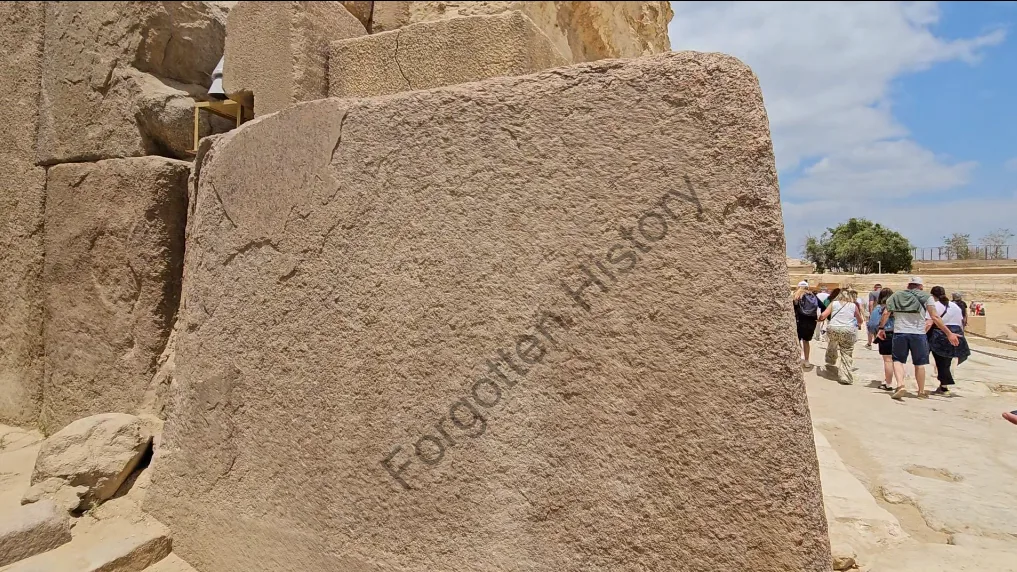
Before entering the Valley Temple, enormous granite blocks immediately dominate your view. These blocks form the remaining casing stones that once covered much of the structure.
Each weighs over 50 tons and, according to the accepted explanation, workers quarried them at Aswan and transported them more than 500 miles north to Giza.
That explanation immediately raises questions.
Moving enormous stones creates one challenge. Moving them with precision creates another entirely.
When I stood beside these blocks in person, the scale felt almost absurd. Photographs flatten everything. Reality does not.
Then I moved closer and noticed something even stranger.
The joints between many of these stones almost disappear.
These are not rough blocks stacked together. The fitting looks astonishingly precise.
That creates another problem.
The builders worked with granite, one of the hardest stones on Earth. Modern industry uses diamond tools, precision saws, and heavy machinery to shape granite accurately, yet we are told ancient builders achieved extraordinary precision thousands of years ago using Bronze Age technology.
At the entrance to Giza, displays proudly show the tools supposedly used during this period. Copper tools and stone pounders sit on display for visitors to see.
Standing there, I kept asking myself the same question:
Are these tools really enough to explain what sits directly in front of us?
Because copper itself cannot simply cut granite.
At the very least, this leaves two possibilities. Either we still misunderstand aspects of the technology involved, or we still misunderstand parts of the timeline itself.
The Impossible Granite Corners
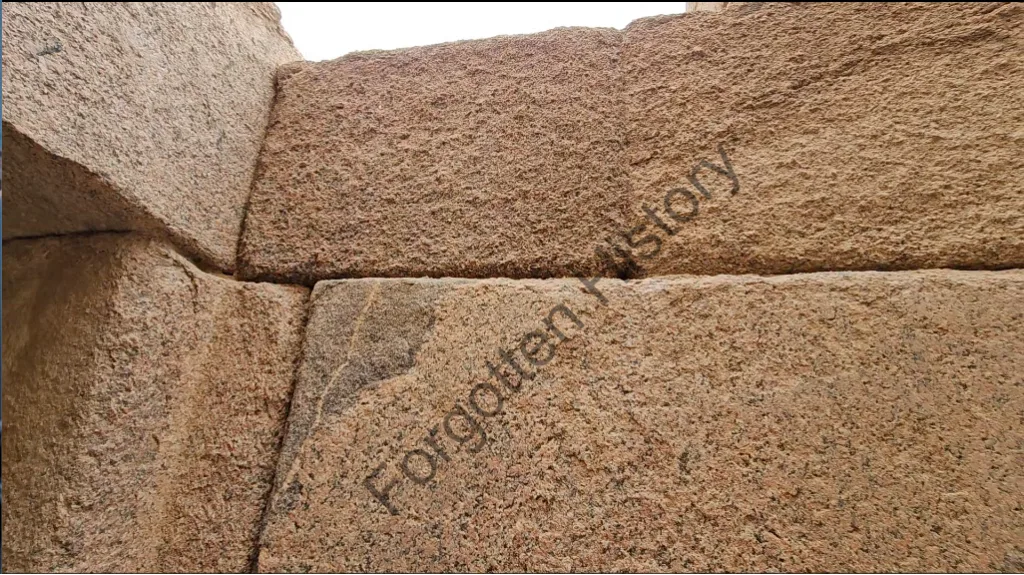
The deeper I explored the Valley Temple, the stranger things became.
I started noticing the corners.
Most people walk straight past them, but once you see them, they become difficult to ignore.
The builders did not simply place two walls together. They carved internal right angles directly into massive granite blocks.
Think about that for a moment.
The corner itself belongs to a single stone.
The builders did not assemble smaller pieces; they shaped the entire corner directly from granite.
Then another detail caught my attention.
The seams do not sit directly on the corners themselves. Instead, the builders offset them, almost as if they wanted the structure to lock together mechanically.
Almost like they designed the structure for stability over immense periods of time.
That does not feel like rough experimentation.
It feels engineered.
The Floor Looks Like One Giant Piece of Stone
Then I looked down.
The floor inside the Valley Temple creates another moment that catches people completely off guard.
Huge alabaster slabs stretch across the structure and, at first glance, they almost appear to form one continuous piece.
Then something strange happens.
You struggle to find the joints.
If you are not actively looking for them, you miss them entirely. Only after staring for a while do the seams begin to reveal themselves.
Somehow, that realization makes the whole thing even more impressive.
Because now you understand that multiple massive slabs fit together so precisely that your eyes struggle to separate them.
Again I found myself asking:
Why build like this?
Smaller stones would have worked.
Rougher joints would have worked.
Less precision would have worked.
Yet someone chose another route entirely.
Someone chose perfection.
The Great Sphinx Changes Everything
The Valley Temple sits directly beside the Great Sphinx, and I do not believe that connection happened by accident.
The same erosion debate surrounding the Sphinx appears here too.
Deep vertical weathering patterns run across parts of the Sphinx and its surrounding enclosure walls. Geologist Robert Schoch argues that heavy rainfall caused these patterns.
That argument matters because Egypt has remained largely arid for thousands of years.
Then another detail makes things even stranger.
For much of recorded history, sand buried most of the Sphinx, leaving only parts of the head exposed.
If large-scale water erosion shaped the structure, then that erosion likely happened long before the desert conditions we know today fully developed.
That possibility raises an uncomfortable question:
What if the Sphinx and nearby structures already stood there long before dynastic Egypt arrived?
What if later Egyptians inherited and restored parts of Giza rather than building everything from scratch?
I cannot prove that.
But I also cannot ignore the questions.
The Mystery That Keeps Pulling Me Back
People often ask whether I think a lost civilization built Giza.
I think we still need more evidence before making claims that strong.
But I also think we often pretend we understand more than we actually do.
Because every time I investigate Giza, I encounter another question.
The precision.
The engineering.
The erosion.
The scale.
Each answer creates another mystery.
Maybe that explains why Giza continues pulling people back.
Not because we solved it.
Because deep down, many of us suspect we haven’t.