
Everyone Thinks They Know This Story
People love to say the Library of Alexandria burned down in one single night.
They picture flames swallowing thousands of ancient scrolls, erasing centuries of human knowledge in just hours.
That’s the version we tell around campfires — dramatic, tragic, simple.
But the truth behind the fall of the Library of Alexandria goes deeper.
It’s not a single act of destruction.
It’s a slow, quiet unraveling.
The kind of loss that happens not when someone attacks knowledge — but when no one protects it.
The real story stretches across empires, religions, and centuries.
And what it reveals about how civilizations treat knowledge… still matters today.
Alexandria: A City That Worshipped Knowledge
The Ptolemaic dynasty built Alexandria, Egypt, not just as a port city but as a capital for the ancient world’s knowledge.
The Library of Alexandria didn’t just serve scholars, it served a mission:
To collect every written work ever created and store it in one place.
They believed that knowledge held power beyond borders and kings.
So they created the most ambitious intellectual project the ancient world had ever seen.
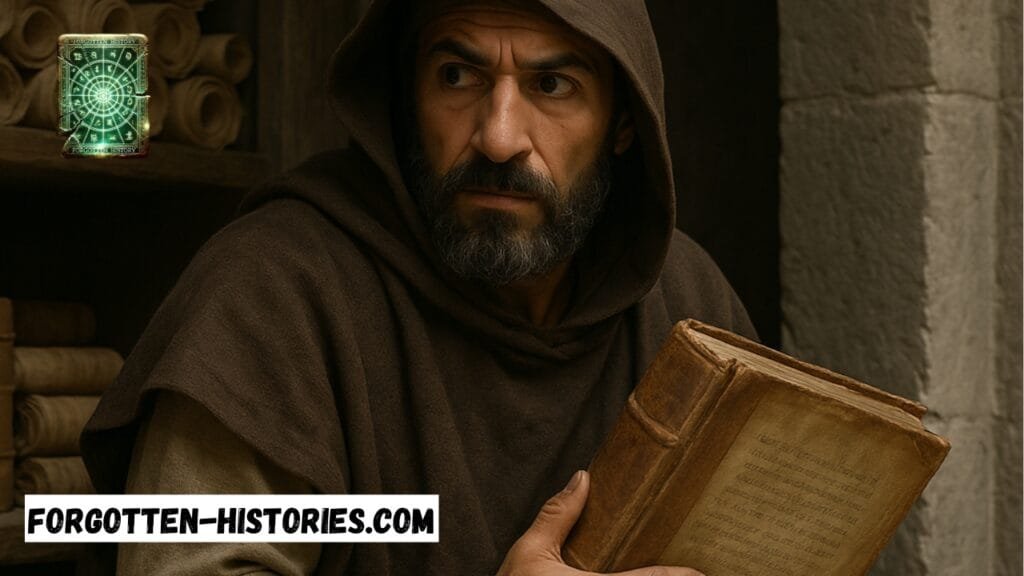
The library didn’t wait for scrolls to arrive.
It sent agents across Africa, Asia, and Europe to hunt down manuscripts.
They bought, borrowed, copied, and sometimes outright stole texts.
When ships arrived in Alexandria’s harbor, port authorities seized any written materials, copied them, and stored the duplicates in the library.
Often, they returned the copies, not the originals.
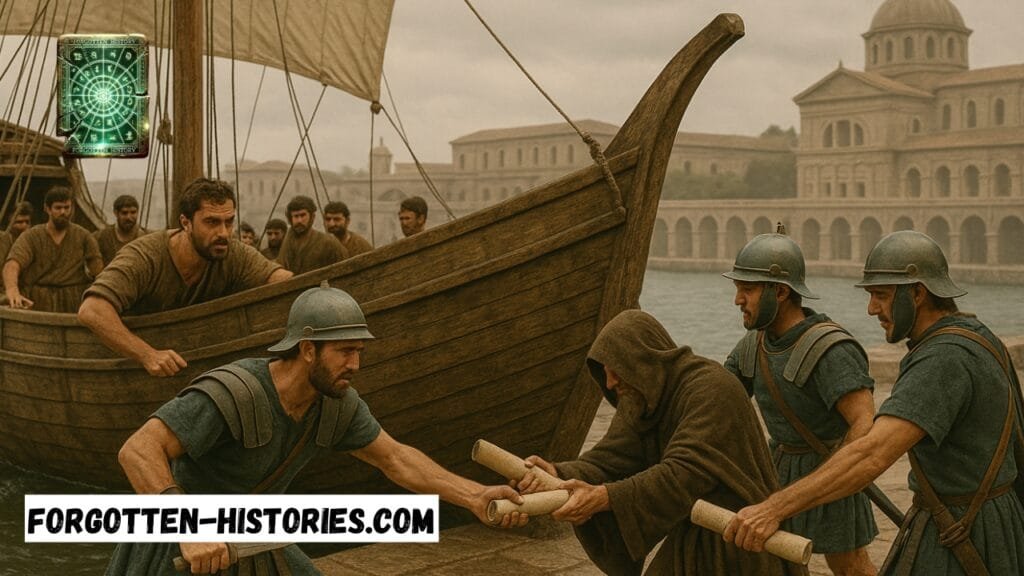
The Ptolemies saw this as preservation, not theft.
They believed they were saving knowledge from time.
Inside the Library of Alexandria: More Than Just Scrolls
The Library of Alexandria functioned less like a public library and more like a global research hub.
It brought together the sharpest minds from across the ancient world:
- Greek mathematicians
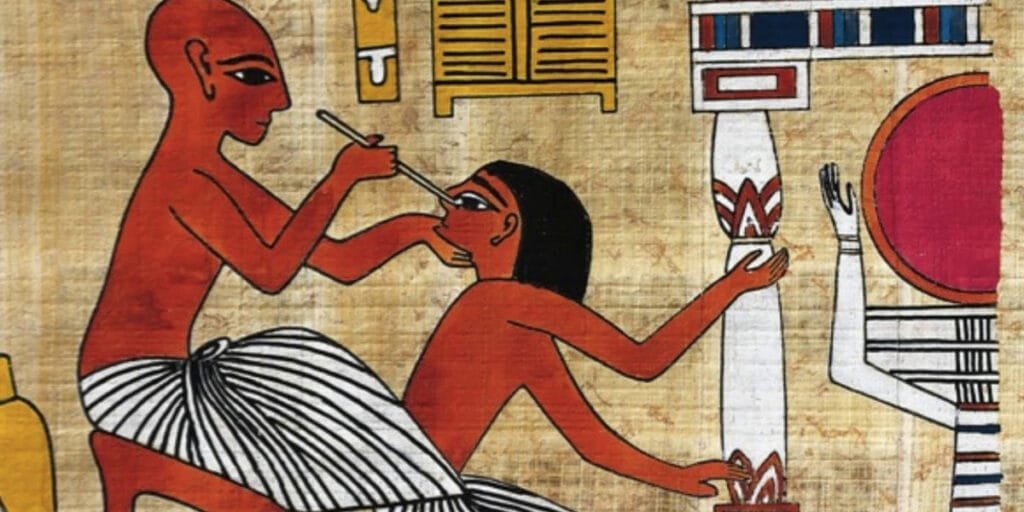
- Egyptian doctors
- Babylonian astronomers
- Indian philosophers
These thinkers didn’t just read — they collaborated, debated, and discovered.
Here’s what they accomplished:
- Eratosthenes measured the Earth’s circumference using shadows and basic geometry — and nearly nailed it.
- Hipparchus mapped the stars with stunning accuracy.
- Alexandrian doctors performed anatomical dissections that wouldn’t happen again until the Renaissance.
Scholars worked, lived, and wrote in the library complex, which included gardens, lecture halls, and observatories.
It held histories now lost, medical knowledge forgotten, and scientific theories centuries ahead of their time.
This place didn’t just hold wisdom — it generated it.
The First Fire: Julius Caesar’s Attack
The unraveling began in 48 BCE.
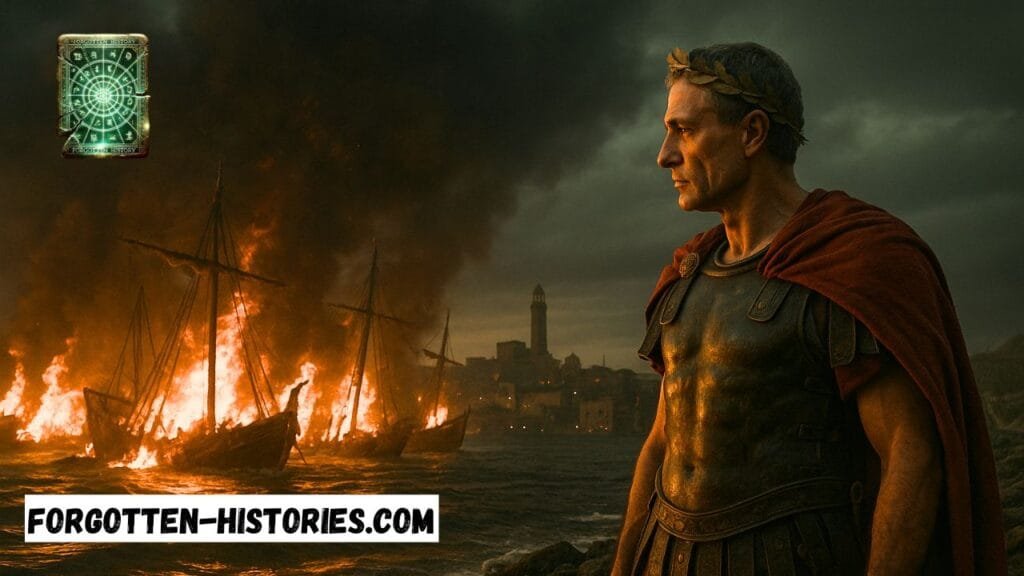
Julius Caesar, caught in a military conflict inside Alexandria, set fire to his own ships in the harbor to block the Egyptian fleet.
The flames spread to the city — and to the warehouses where the library stored scrolls waiting for cataloging.
We don’t know how many texts burned.
But we know this:
The fire didn’t destroy the library entirely.
It wounded it.
The Library of Alexandria survived, but weaker.
The Fall of the Serapeum: Another Blow
Centuries passed. Rome conquered Egypt.
Religious power shifted as Christianity replaced older traditions.
Support for classical learning dwindled.
In the late 4th century, a Christian mob destroyed the Serapeum of Alexandria, a temple that housed part of the library’s collection.
They saw it as a symbol of paganism — not progress.
Once again, scrolls disappeared, and history blurred the details.
No one wrote down how many manuscripts vanished.
No one stood guard.
The Controversial Conquest Theory
One of the most popular claims about the library’s destruction points to the Muslim conquest of Egypt in the 7th century.
According to later sources, the caliph ordered the burning of the remaining scrolls for use as fuel in the city’s bathhouses.
But historians see problems in this story.
The account first appears centuries after the fact.
It comes from writers with political agendas.
And most importantly, by the time of the Muslim conquest, the scrolls may have already vanished.
War, neglect, ideology, and disinterest did the work long before anyone needed firewood.
What Did We Lose?
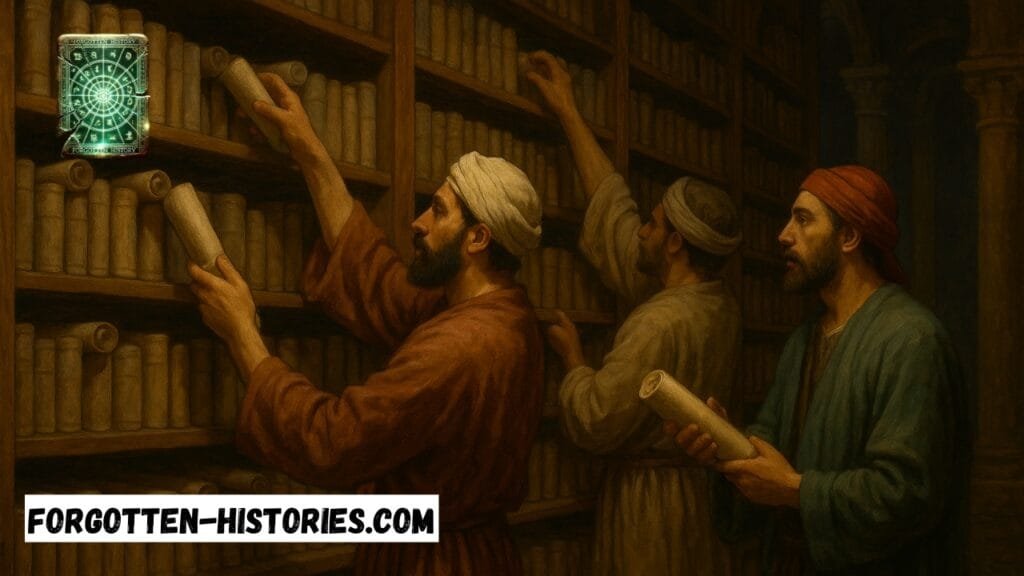
This question haunts historians:
What did the Library of Alexandria hold that we can never recover?
Ancient civilizations had medical texts, astronomical charts, engineering designs, and philosophical systems far ahead of their time.
Here’s what we know they knew:
- Egyptian doctors understood the human body in detail.
- Greek anatomists conducted surgical studies we wouldn’t see again for 1,000 years.
- Babylonian and Indian astronomers tracked the stars with incredible accuracy.
- Early thinkers possibly discussed heliocentric theory centuries before Copernicus.
Did Alexandria contain these ideas?
Probably.
Did it hold works from now-lost civilizations?
Possibly.
We didn’t just lose texts.
We lost voices — thinkers whose insights never reached us.
That’s the real tragedy.
Why the Fall of the Library of Alexandria Still Matters Today

This story isn’t just about scrolls burned or books stolen.
It’s about how civilizations treat knowledge.
The Library of Alexandria didn’t fall because one army destroyed it.
It fell because no one defended it when it mattered.
That pattern still repeats:
- Governments censor.
- Corporations delete.
- Hackers corrupt.
- Books get banned.
- Archives vanish in war zones.
Today, we store our knowledge in the cloud — fast, powerful, and terrifyingly fragile.
One cyberattack, blackout, or regime change could wipe out years of digital memory.
We trust the internet the same way ancient scholars trusted their scrolls.
But nothing lasts unless someone fights to preserve it.
the Library of Alexandria Legacy Lives On
The Library of Alexandria disappeared, but its spirit survived.
Every modern university, research institution, public library, and digital archive carries a part of its mission.
People still chase knowledge.
They still fight misinformation.
They still protect truth from distortion.
Every time someone archives data, translates a text, or questions accepted history — the dream of Alexandria breathes again.
That dream only dies if we forget to care.
Your Curiosity Matters — Because Knowledge Needs Guardians
The fall of the Library of Alexandria wasn’t just a moment in the past.
It was a warning.
Knowledge only survives when people protect it — not with weapons, but with curiosity, discipline, and courage.
If you read this far, you’re part of that.
You chose to question the myth.
You chose to understand what humanity once knew — and what it let slip away.
And this story?
It’s just the beginning.